
The advantage does not come from buying an AI tool. It comes from redesigning the work around a specific business decision.
“It will likely replace most jobs that involve mundane, intellectual labor.”Geoffrey Hinton, TIME
I think the useful response is not panic. It is specificity.
Which labor? Which exceptions? Which data? Which authority? Which system gets updated?
Start with the exceptions
Most workflows look orderly when described in a process diagram. The real work is usually less tidy. An invoice is missing. The policy is ambiguous. The ERP and CRM disagree. A customer is important enough that normal routing no longer feels appropriate.
Those cases are not noise around the process. They are where the process reveals its risk.
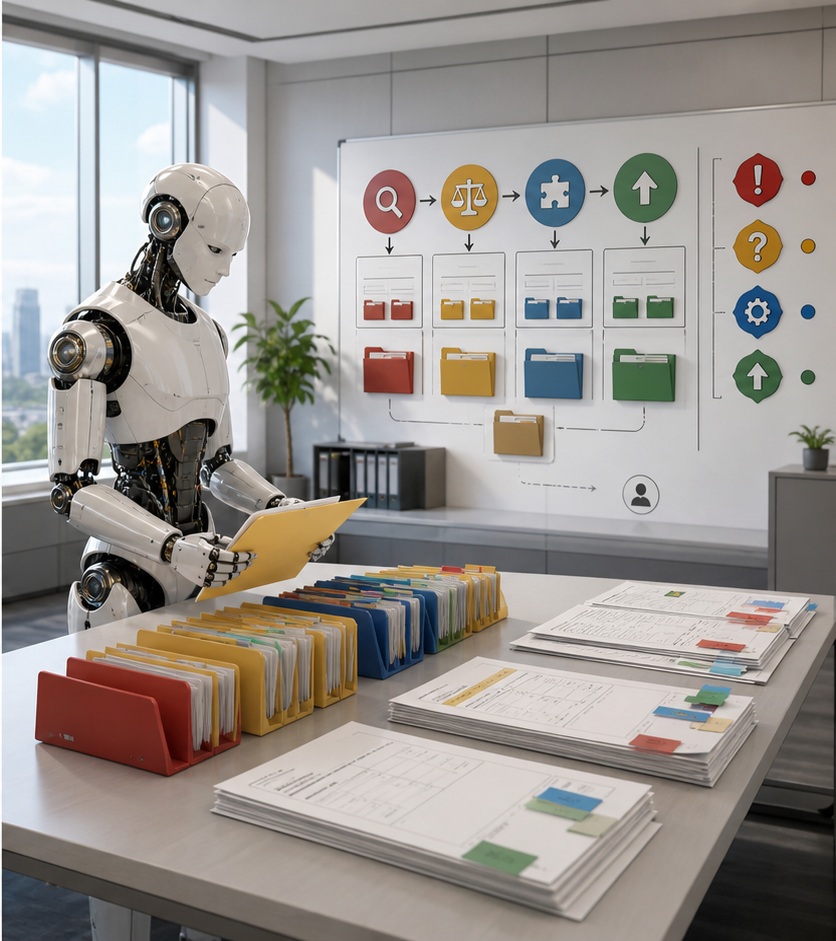
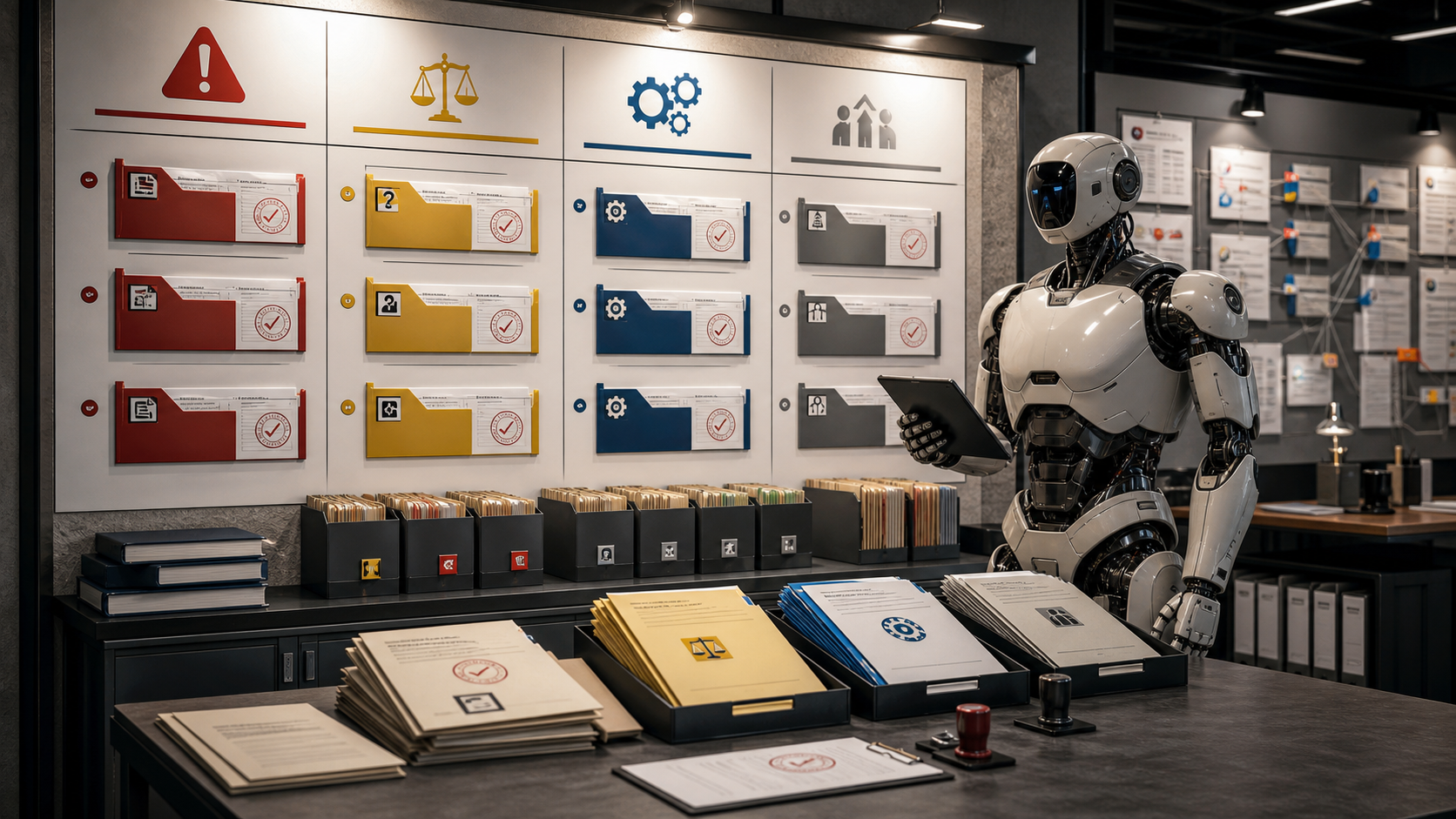
Before I automate a workflow, I want to know how its exceptions behave. I want to group them by cause, identify who has authority to resolve them, and decide what evidence is required before the work can continue. A useful taxonomy might include missing evidence, policy ambiguity, system mismatch, financial exposure, and customer escalation.
That turns a vague AI opportunity into an implementation plan: classify the case, retrieve the evidence, apply the right rule, route the risk, and leave an audit trail.
The evidence is already in the business
The best starting point is often not a workshop or an AI brainstorm. It is the event data already produced by the workflow.
PM4Py is a useful open-source process-mining library because it works from event logs to discover how work actually moves. It can help expose the paths, bottlenecks, rework, and deviations that a clean process diagram hides.
That is the kind of technical foundation an AI redesign needs. The model can help classify and explain cases, but the organization still has to understand the system it is changing.
Make the edge cases explicit
AI strategy gets vague fast. Exception handling makes it concrete.
If a company cannot describe its edge cases, it is not ready to hand the workflow to an agent. If it can describe them, the next decisions become practical. Which cases can be automated? Which require a human decision? Which need a better source system? Which should be stopped before they create financial or customer harm?
The competitive advantage will not come from having an AI pilot that answers questions. It will come from redesigning the work so the right cases move faster, the risky cases receive the right attention, and the organization can prove what happened.
Leave a Reply